Notes for Mary Talk for CDA 2026
Opening
My dear brothers and sisters in Christ,
When we think of Easter morning, we often think of Mary Magdalene at the tomb, Peter and John running to see the burial cloths, the disciples on the road to Emmaus, or Thomas placing his hand into the wounds of Christ. But there is another figure we should consider, even though Scripture speaks of her quietly: the Blessed Virgin Mary. Where was Mary after the Resurrection? What was in her heart? And what can she teach us about living as people of the Resurrection?
Title: Mary: The Woman Who Already Believed
1. Mary at the Cross: Faith When Everything Looks Lost.
2. Holy Saturday: Mary as the Keeper of Hope.
3. Easter Morning: The Joy That Needs No Proof
4. Mary in the Upper Room: Mother of the Risen Church
5. Mary, Assumed and Crowned: The Church’s Hope Already Fulfilled
The Gospels do not explicitly describe an appearance of the risen Christ to Mary His Mother. That silence can become a powerful meditation. Others needed the empty tomb, angels, the breaking of the bread, or wounds they could touch. Mary had already stood beneath the Cross in faith. She did not stop believing when everyone else scattered.
But today, I would like us to think about someone else.
I would like us to think about Mary, the Mother of Jesus.
Where was Mary on Easter morning?
The Gospels do not explicitly tell us that the risen Christ appeared to His Mother. Many saints and theologians have found it very fitting to believe that He did. After all, she had shared more deeply than anyone in His suffering. It would seem fitting that she would also share in a special way in His joy.
But Scripture is silent about that meeting, if it happened. And that silence itself invites us to meditate.
Because Mary is not shown running to the tomb in confusion. She is not shown asking where they have taken the body. She is not shown hiding in fear. She is not shown demanding proof. She is not shown saying, like Thomas, “Unless I see, I will not believe.”
Why? Because Mary was the woman who already believed. Mary had believed from the beginning.
When the angel Gabriel came to her and announced something impossible — that she, a virgin, would conceive and bear a son — Mary believed. She did not understand everything. She asked, “How can this be?” But her question was not unbelief. It was the humble question of faith seeking to understand. And when the angel told her that nothing would be impossible for God, she answered, “Behold, I am the handmaid of the Lord; let it be done to me according to your word.”
From that moment on, Mary lived by faith.
She believed when Joseph did not yet understand.
She believed when she gave birth in poverty, far from home, and laid her child in a manger.
She believed when Simeon told her that a sword would pierce her soul.
She believed when she and Joseph had to flee into Egypt to protect the child from Herod.
She believed during the hidden years in Nazareth, when the Son of God lived quietly under her roof.
She believed at Cana, when she said to the servants, “Do whatever He tells you.”
And she believed at Calvary.
That is where Mary’s faith shines most brightly.
At the Cross, almost everything seemed to contradict the promises of God. Gabriel had said that her Son would be great. He would be called Son of the Most High. He would reign over the house of Jacob forever. His kingdom would have no end.
And now He is hanging on the Cross.
Rejected. Mocked. Beaten. Crowned with thorns. Nailed between criminals. Apparently powerless.
To the eyes of the world, this looked like failure. To the eyes of the disciples, it looked like disaster. To the enemies of Jesus, it looked like victory.
But Mary stood there.
The Gospel does not say that Mary understood everything. It does not say that she felt no pain. In fact, Simeon had already prophesied that a sword would pierce her soul. Mary’s faith did not protect her from suffering. It carried her through suffering.
That is very important for us.
Sometimes we imagine that if we had stronger faith, we would not suffer so much. We think faith should make everything clear, easy, and emotionally peaceful. But Mary shows us something deeper. Faith does not always remove the sword. Faith gives us the grace to stand when the sword pierces.
Mary stands beneath the Cross as the woman who already believed.
She believed that God was faithful even when she could not see the outcome. She believed that the Father’s promises were not false, even when everything looked lost. She believed that her Son was still the Savior, even when He looked defeated.
And so, when Easter comes, Mary is not simply surprised by joy. She is ready for joy.
Others needed to see in order to believe. Mary believed, and so she was ready to see.
This is why Mary is such a powerful guide for us on retreat.
Because many of us come to the Lord carrying questions. We carry sorrows. We carry disappointments. We carry things we do not understand. Perhaps there are places in our lives where it feels as though God has been silent. Perhaps there are prayers that seem unanswered. Perhaps there are wounds that have not healed as quickly as we hoped.
Mary teaches us what to do in those moments.
She teaches us to remain.
She teaches us to trust.
She teaches us to hold fast to the Word of God even when we cannot yet see how it will be fulfilled.
Mary is the woman who already believed. And she wants to teach us to believe also — not only when the tomb is empty, not only when the answer is clear, not only when the joy has returned, but even on Good Friday, even on Holy Saturday, even when we are waiting in the dark.
Because the God who kept His promise to Mary will keep His promises to us.
And the Son who rose from the dead still comes to meet those who trust in Him.
1. Mary at the Cross: Faith When Everything Looks Lost
To understand Mary after the Resurrection, we first have to stand with Mary at the Cross.
Saint John tells us, very simply, “Standing by the cross of Jesus were his mother…” That one word matters: standing.
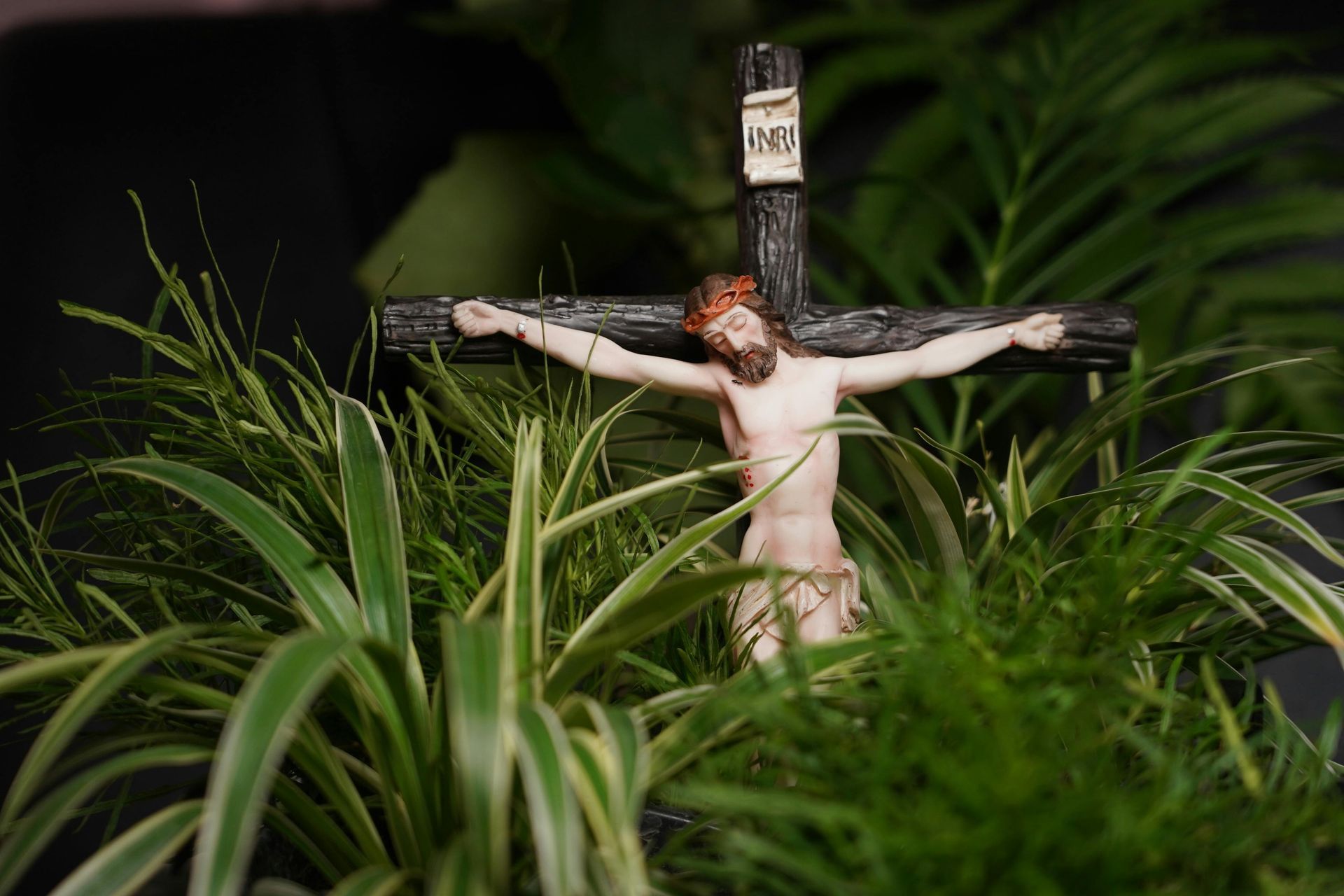
Mary was not merely present at Calvary. She was standing. She was not collapsed in despair. She was not running away. She was not cursing God. She was not demanding an explanation. She was standing beneath the Cross of her Son.
And what did she see?
She saw the Child she had carried in her womb now lifted up on the wood of the Cross.
She saw the hands she had once held now pierced with nails.
She saw the face she had kissed now bruised and bloodied.
She saw the Son whom Gabriel had called “holy, the Son of God,” treated as a criminal.
She saw the One whom Simeon had called “a light for revelation to the Gentiles” swallowed up, it seemed, by darkness.
This is where Mary’s faith becomes especially powerful for us.
Because at Calvary, almost everything visible seemed to contradict what God had promised.
The angel had told Mary, “He will be great, and will be called the Son of the Most High.” But now He is mocked.
The angel had told her, “The Lord God will give to him the throne of his father David.” But now His throne is the Cross.
The angel had told her, “He will reign over the house of Jacob forever.” But now He is dying.
The angel had told her, “Of his kingdom there will be no end.” But now, to human eyes, it looks as though His mission has come to an end.
And yet Mary stands.
She stands where faith is most purified.
She stands where love is most wounded.
She stands where hope seems most unreasonable.
Mary does not stand at the Cross because she feels nothing. She stands there precisely because she loves so deeply. Simeon had told her long before, “And a sword will pierce through your own soul also.” At Calvary, that prophecy is fulfilled. The nails pierce the hands and feet of Jesus, but the sword pierces the soul of Mary.
And yet she stands.
This tells us something very important about Christian faith.
Faith is not pretending that suffering does not hurt. Faith is not pretending that we understand everything. Faith is not pretending that death, betrayal, sin, disappointment, and grief are not real.
Mary’s faith does not make Calvary painless.
Mary’s faith makes her able to remain at Calvary without losing God.
That is a very important distinction.
Sometimes, when we suffer, we are tempted to think, “If I had more faith, this would not hurt so much.” But that is not true. Mary had perfect faith, and still her soul was pierced.
Faith does not always take away the sword.
Faith gives us the grace to stand while the sword pierces.
That is why Mary is such a powerful mother for us. She knows what it means to suffer. She knows what it means to love someone and watch them suffer. She knows what it means to face something she cannot control. She knows what it means to trust God when the plan of God is hidden beneath tears.
And at the Cross, Jesus gives her to us.
Seeing His mother and the beloved disciple standing near, Jesus says to Mary, “Woman, behold, your son.” Then He says to the disciple, “Behold, your mother.”
This is not merely a private arrangement for Mary’s care. Certainly, Jesus is providing for His mother. But the Church has always seen something deeper here. The beloved disciple represents all disciples. At the Cross, Mary becomes Mother of the Church, Mother of all who belong to Christ.
And notice where that motherhood is given: not at Bethlehem, not at Cana, not in the glory of the Resurrection, but at the Cross.
Mary becomes our mother in the place of suffering.
That means we should not be afraid to bring our wounds to her. We should not be afraid to bring our confusion, our grief, our family struggles, our sins, our disappointments, our unanswered prayers. She is not a distant mother who only understands peaceful lives and easy faith. She is the mother who stood at Calvary.
And she teaches us how to stand.
She teaches us to stand beneath the Cross without running away.
She teaches us to stand beside those who suffer, even when we cannot fix their suffering.
She teaches us to stand in faith when God’s promises seem hidden.
She teaches us to stand in love when love costs us something.
This is very important for a retreat, because many people come to a retreat hoping God will remove every burden. And sometimes He does bring healing, consolation, clarity, or peace. But sometimes, before He removes the Cross, He teaches us how to stand beneath it.
Mary shows us that grace.
She does not explain away the Cross. She does not avoid it. She does not abandon Jesus because His mission now looks like failure.
She remains.
And that is the first lesson Mary gives us as we approach the Resurrection:
Before we can understand Easter joy, we must learn Marian faith at the Cross.
Because the Resurrection does not erase the Cross. The Resurrection reveals what God was doing through the Cross.
Mary did not yet see the empty tomb. She did not yet see the glory of Easter morning. She did not yet see the apostles going out to preach. She did not yet see the nations brought into the Church.
At Calvary, she saw only her crucified Son.
But she stood.
And because she stood in faith on Good Friday, she was ready to receive the joy of Easter Sunday.
And we can relate to Mary because we all have our own moments of darkness: grief, disappointment, betrayal, unanswered prayer, dryness.
2. Holy Saturday: Mary as the Keeper of Hope
After Calvary comes Holy Saturday.
And Holy Saturday is one of the most mysterious days in the whole Christian year.
Good Friday is full of sorrow, but at least something is happening. Jesus is arrested. He is judged. He carries the Cross. He is crucified. He speaks from the Cross. He dies. His side is pierced. His body is taken down and placed in the tomb.
Easter Sunday is full of joy. The stone is rolled away. The tomb is empty. Angels announce the Resurrection. The risen Lord appears to His disciples.
But Holy Saturday is different.
Holy Saturday is quiet.
Jesus is in the tomb. The apostles are scattered. The crowds have gone home. The enemies of Jesus think they have won. The disciples are afraid and confused. The great hopes that had gathered around Jesus seem buried with Him.
Holy Saturday is the day of silence.
It is the day when nothing seems to be happening.
And that is why Holy Saturday is so important for the spiritual life.
Because many people know what Good Friday feels like. They know the experience of suffering, loss, shock, grief, betrayal, fear, or pain. And many people also know what Easter feels like. They know moments when God consoles them, when prayer is alive, when grace is obvious, when hope returns.
But much of the Christian life is lived somewhere in between.
Much of the Christian life is Holy Saturday.
It is the place between the promise and the fulfillment.
It is the place between the prayer and the answer.
It is the place between the wound and the healing.
It is the place between what God has said and what we can currently see.
And on Holy Saturday, Mary becomes for us the keeper of hope.
The Scriptures do not give us a detailed description of Mary on Holy Saturday. But we can meditate on what must have been in her heart.
Mary remembered.
She remembered the angel Gabriel, who had said, “He will be great, and will be called the Son of the Most High.”
She remembered the promise: “He will reign over the house of Jacob forever, and of his kingdom there will be no end.”
She remembered Simeon, who had told her that her Son would be a sign of contradiction, and that a sword would pierce her own soul.
She remembered the words and deeds of Jesus. She remembered His power, His mercy, His authority, His holiness.
And surely she remembered that God is faithful.
That is one of Mary’s great gifts: she remembers the works of God.
Saint Luke tells us that Mary “kept all these things, pondering them in her heart.” Mary is not careless with the Word of God. She receives it. She guards it. She turns it over in prayer. She allows it to sink deeply into her soul.
So on Holy Saturday, when others may have been overwhelmed by fear, Mary held together the sorrow of Calvary and the promises of God.
She did not deny the sorrow. Her Son had truly died.
But she also did not deny the promise. God had spoken.
This is what hope does.
Hope is not optimism.
Optimism says, “Things will probably work out.”
Hope says, “God is faithful, even when I cannot see how this will work out.”
Optimism depends on circumstances.
Hope depends on God.
Mary’s hope was not based on the visible situation. The visible situation was a sealed tomb. The visible situation was the apparent defeat of Jesus. The visible situation was a frightened band of disciples and a world that seemed to move on as if nothing had happened.
Mary’s hope was based on the fidelity of God.
And this is why we need Mary so much.
Because we all experience Holy Saturday moments.
We all experience times when God seems silent, when prayers seem unanswered, when the future is unclear, when something we loved appears to have died, when a person we care about seems far from God, when the Church seems wounded, when our own hearts feel empty.
In those moments, Mary teaches us how to wait.
She teaches us that waiting is not the same as giving up.
She teaches us that silence is not the same as absence.
She teaches us that the tomb is not the same as defeat.
She teaches us that God can be most deeply at work precisely when we can see the least.
On Holy Saturday, no one saw the Harrowing of Hell. No one saw Christ descending to the dead. No one saw the victory being proclaimed to the souls awaiting redemption. From the outside, it looked like nothing was happening.
But in the hidden depths, Christ was conquering.
That is a lesson we must never forget.
Sometimes, in our own lives, it looks like nothing is happening. We pray, and we do not see change. We struggle, and we do not see progress. We ask for grace, and we still feel weak. We entrust someone to God, and they still seem far away.
But hidden from our sight, God may be doing His deepest work.
Mary helps us believe that.
She teaches us to keep vigil when we cannot see.
She teaches us to hold the promises of God close to the heart.
She teaches us to wait without despair.
She teaches us to hope without demanding control.
And in a certain sense, Mary holds the faith of the Church on Holy Saturday.
The apostles had scattered. Peter had denied Him. Thomas would later doubt. The disciples on the road to Emmaus would say, “We had hoped…” as though their hope had been broken.
But Mary’s hope endured.
This is why some spiritual writers have loved to speak of Mary as the one in whom the light of faith remained burning during the darkness of Holy Saturday. While the world passed through the silence of the tomb, Mary kept the flame of hope alive.
That image is very powerful.
A small flame in the darkness.
A lamp burning beside the tomb.
A mother’s heart holding the promise when everyone else has forgotten.
That is Mary on Holy Saturday.
And maybe that is what Mary wants to do for us on this retreat.
She wants to help us recover hope.
Not shallow hope. Not vague optimism. Not the kind of hope that depends on everything going the way we want.
She wants to give us Christian hope: the hope that says, “God is faithful. Christ is risen. No tomb is stronger than His love. No darkness is beyond His reach. No silence means that He has abandoned me.”
So perhaps we can ask ourselves:
Where am I living Holy Saturday right now?
Where do I feel caught between Good Friday and Easter Sunday?
Where am I waiting for God to act?
Where do I need Mary to help me keep hope alive?
Because Mary, the keeper of hope, does not stand far away from us. She waits with us. She prays with us. She teaches us to remember what God has spoken.
And she whispers to the soul:
Do not despair.
The stone has not yet been rolled away, but God is already at work.
The morning has not yet come, but Christ has already entered the depths.
The promise has not failed.
Easter is coming.
When everything seemed finished, Mary held in her heart the promise that God was not finished.
3. Easter Morning: The Joy That Needs No Proof
After the silence of Holy Saturday comes Easter morning.
The stone is rolled away. The tomb is empty. The burial cloths are left behind. The angels announce the news that changes the history of the world: “He is not here, for He has risen.”
But notice something very interesting.
The Gospels tell us about Mary Magdalene coming to the tomb. They tell us about Peter and John running to the tomb. They tell us about the women who are afraid and yet filled with joy. They tell us about the disciples on the road to Emmaus. They tell us about Thomas, who struggles to believe until he sees the wounds.
But they do not explicitly tell us about the Blessed Virgin Mary on Easter morning.
And that silence is striking. Where was Mary, Jesus’ mother?
Many saints and spiritual writers have found it very fitting to believe that Jesus appeared first to His Mother. That is not recorded directly in the Gospels, so we should not speak of it as though it were written there. But it is certainly a beautiful and reasonable meditation.
After all, who had shared more deeply in His suffering than Mary?
Who had loved Him with a purer love?
Who had stood more faithfully at the Cross?
Who had believed more completely in the promises of God?
It would be fitting that she, who had been pierced most deeply by sorrow, would be among the first to receive the joy of the Resurrection.
But whether we meditate on that possible meeting, or whether we simply remain with the silence of Scripture, Mary teaches us something important.
Mary’s joy does not need to be noisy.
Mary’s faith does not need to be frantic.
Mary does not appear in the Gospels as one running in confusion, asking, “Where is He?” She does not appear as one demanding signs. She does not appear as one saying, “Unless I see, I will not believe.”
Why?
Because Mary is the woman who already believed.
Others needed to see the empty tomb.
Mary had already held the promises of God in her heart.
Others needed the angels to announce, “He is risen.”
Mary had already learned to trust the word of God spoken to her.
Others needed to see the wounds.
Mary had already stood beneath those wounds when they were opened on Calvary.
Others needed proof before joy could return.
Mary’s heart was ready for joy because her heart had never abandoned faith.
That is why we might call Easter morning, for Mary, the joy that needs no proof.
Not because proof is bad. The Resurrection is real. The empty tomb matters. The appearances of the risen Christ matter. The apostles are witnesses, not poets inventing a symbol. Christianity is founded on the real, bodily Resurrection of Jesus Christ.
But Mary teaches us that there is a kind of faith so deeply rooted in God that it is ready to receive joy before everything is explained.
Mary does not need to understand every detail in order to trust.
She does not need to control the timing.
She does not need to see the whole plan laid out before her.
She has already given God her fiat: “Let it be done to me according to your word.”
That fiat did not end at the Annunciation. It continued through Bethlehem. It continued through Egypt. It continued through Nazareth. It continued through Cana. It continued through Calvary. And now, on Easter morning, that same fiat opens into joy.
This is very important for us.
Because sometimes we want joy only after everything has been proven to us.
We say, “Lord, I will rejoice when I understand why this happened.”
“I will trust You when I see how You are going to fix it.”
“I will have peace when You answer all my questions.”
“I will believe in Your goodness when the pain is gone.”
But Mary teaches us another way.
Mary teaches us to trust first.
Mary teaches us that joy is not the same as having every answer. Easter joy is not the joy of someone who finally controls life. It is the joy of someone who knows that Christ is risen, and therefore God’s promises are true.
Mary’s joy is not shallow happiness.
It is not the joy of avoiding suffering.
It is not the joy of pretending the Cross did not happen.
Mary’s Easter joy still carries the memory of Calvary. The risen Christ is the same Christ who was crucified. His glorified body still bears the wounds. The Resurrection does not erase the Cross; it reveals the victory hidden within it.
So Mary’s joy is deep.
It is the joy of a mother who has passed through the sword and discovered that death does not have the final word.
It is the joy of a disciple who has trusted God in the darkness and now sees that not one of His promises has failed.
It is the joy of the New Eve, seeing the curse of sin and death undone by the obedience of her Son.
It is the joy of the Church, born from the pierced side of Christ and now called to live in the light of His victory.
And this joy is offered to us.
Maybe some of us are still waiting for proof before we allow ourselves to trust God. Maybe we are saying, “Lord, show me first. Explain first. Fix this first. Then I will believe. Then I will rejoice.”
Mary gently invites us to reverse that order.
She invites us to believe because God is faithful.
She invites us to hope because Christ is risen.
She invites us to rejoice, not because every wound has disappeared, but because every wound can now be touched by the victory of Jesus.
This does not mean that our questions vanish overnight. It does not mean our grief becomes unreal. It does not mean our sufferings no longer matter.
It means that the Resurrection gives a new light to everything.
The Cross is no longer only an instrument of death. It has become the tree of life.
The tomb is no longer only a place of burial. It has become the womb of the new creation.
The wounds of Christ are no longer only signs of violence. They have become signs of mercy.
And Mary sees all of this with the eyes of faith.
She is the woman who already believed, and therefore she is ready for the joy that Easter brings.
So we can ask ourselves:
Do I trust God only when I have proof?
Do I rejoice only when I understand?
Do I wait for every question to be answered before I surrender?
Or can I ask Mary to teach me her Easter faith?
A faith that says, “I do not see everything, but I know God is faithful.”
A hope that says, “The tomb may still seem sealed, but Christ is risen.”
A joy that says, “The Cross was real, but it was not the end.”
Mary’s Easter joy is quiet, deep, and unshakable.
It is the joy of one who has believed before seeing.
And now, standing in the light of the Resurrection, she teaches the Church to do the same.
Some people needed to see in order to believe. Mary believed, and so she was ready to see.
4. Mary in the Upper Room: Mother of the Risen Church
After Easter morning, we next see Mary in the Upper Room.
Saint Luke tells us in the Acts of the Apostles that, after the Ascension, the apostles returned to Jerusalem and gathered together in prayer. And then he gives us this beautiful detail: they were gathered “together with the women and Mary the mother of Jesus.”
That is the clearest biblical picture we have of Mary after the Resurrection.
Mary is with the Church.
She is with the apostles.
She is with the frightened, wounded, imperfect men who had abandoned her Son.
And she is praying.
That detail is very important. Mary is not shown taking Peter’s place. She is not shown commanding the apostles. She is not shown drawing attention to herself. She is there as Mother. She is there as the woman of faith. She is there as the one whose whole life says, “Let it be done to me according to your word.”
And now she is helping the newborn Church learn to say the same thing.
Think of who is in that room.
Peter is there. Peter, who had promised that he would die with Jesus, and then denied Him three times.
The other apostles are there. Most of them had fled when Jesus was arrested.
Thomas is there, the one who struggled to believe.
Others are there too, waiting, uncertain, probably still trying to understand what the Lord wanted from them.
And Mary is there with them.
She does not shame them.
She does not say, “Where were you at Calvary?”
She does not say, “I stood by the Cross while you ran away.”
She does not say, “How could you abandon my Son?”
No, Mary prays with them.
That is the heart of her motherhood.
Mary is not the mother of perfect disciples. She is the mother of disciples who need mercy. She is the mother of disciples who have failed, who are afraid, who need the Holy Spirit.
And this is very consoling for us.
Because sometimes we imagine that Mary is only close to the very holy, the very pure, the very strong. But in the Upper Room, Mary is surrounded by weakness. She is surrounded by men who have failed. She is surrounded by people who cannot fulfill the mission of Christ by their own strength.
And there she is: Mother of the Risen Church.
She gathers with them.
She waits with them.
She prays with them.
She helps them prepare for the gift of the Holy Spirit.
In a beautiful way, the Upper Room echoes the Annunciation.
At the Annunciation, the Holy Spirit comes upon Mary, and Christ is conceived in her womb.
In the Upper Room, Mary prays with the Church, and the Holy Spirit comes upon the apostles, and the Church is manifested to the world.
At the Annunciation, Mary receives Christ physically.
At Pentecost, the Church receives the power to bring Christ spiritually and sacramentally to the nations.
At the Annunciation, Mary says, “Let it be done to me according to your word.”
In the Upper Room, she helps the Church become ready to say, “Let it be done to us according to your word.”
This is why Mary is so important for the life of the Church. She is not a distraction from the Holy Spirit. She is the one who teaches us how to receive the Holy Spirit.
She teaches us receptivity.
She teaches us humility.
She teaches us prayer.
She teaches us to wait on God’s timing.
She teaches us that mission does not begin with our cleverness, our energy, our plans, or our strength. Mission begins with grace.
Before the apostles preach, they pray.
Before they go out to the nations, they gather in the Upper Room.
Before Peter speaks boldly in public, he waits humbly in prayer.
And Mary is there.
This is a lesson the Church always needs.
We can become very busy. We can make many plans. We can organize programs, ministries, meetings, calendars, and strategies. Those things can be good and necessary. But if we are not first gathered in prayer, if we are not waiting for the Holy Spirit, if we are not receiving Christ as Mary received Him, then we are trying to do the work of God without the power of God.
Mary reminds the Church that fruitfulness comes from receptivity.
She reminds us that before we can bear Christ to the world, we must first receive Him.
She reminds us that before we speak about Christ, we must listen to Him.
She reminds us that before we act in His name, we must allow His Spirit to act in us.
And she reminds us that no failure is final when Christ is risen.
Peter failed, but he became the rock.
Thomas doubted, but he became a witness.
The apostles fled, but they became martyrs.
The Church began not as a gathering of heroes, but as a gathering of redeemed sinners praying with Mary for the Holy Spirit.
That is good news for us.
Because we also come to the Lord with weakness. We come with our past sins, our fears, our doubts, our inconsistencies, our wounds. We come knowing that we are not strong enough by ourselves.
And Mary does not drive us away.
She gathers us into prayer.
She brings us back to her Son.
She teaches us to wait for the Holy Spirit.
Mary, Mother of the Risen Church, is still doing this.
She is still present with the Church, not as a replacement for Christ, but as the mother who leads us to Christ.
She still says what she said at Cana: “Do whatever He tells you.”
She still teaches us her fiat: “Let it be done according to your word.”
She still helps the Church pass from fear to mission, from hiding to witness, from weakness to Pentecost.
And this is especially important for a retreat.
A retreat is a kind of Upper Room.
We step away from the noise. We gather in prayer. We admit that we need grace. We wait on the Lord. We ask for the Holy Spirit. We allow Mary to pray with us and for us.
And then, like the apostles, we are not meant to remain locked away forever.
The Upper Room leads to mission.
Prayer leads to witness.
The gift of the Holy Spirit sends the Church out into the world.
So we can ask ourselves:
What fear keeps me locked in the Upper Room?
Where have I failed and need to receive mercy?
Where do I need the Holy Spirit to give me courage?
What mission is Christ preparing me for?
Mary, Mother of the Risen Church, stands with us in those questions.
She does not shame us for our weakness. She does not abandon us because of our failures. She prays with us until the fire of the Holy Spirit comes.
And when that fire comes, the same disciples who were once afraid become witnesses to the ends of the earth.
That is what Mary desires for us.
Not that we merely admire her from a distance, but that we learn from her how to receive Christ, how to trust the Father, how to wait for the Holy Spirit, and how to go forth as living members of the risen Church.
Mary is the Mother of Mercy because she stands with sinners who are trying to become saints.
5. Mary, Assumed and Crowned: The Church’s Hope Already Fulfilled
After the Cross, after Holy Saturday, after Easter morning, and after the Upper Room, we should finally lift our eyes to Mary assumed into heaven and crowned as Queen.
This is the completion of the path we have been following.
Mary stands at the Cross in faith.
Mary waits through Holy Saturday in hope.
Mary receives Easter joy with a heart ready to believe.
Mary prays with the Church in the Upper Room.
And then, at the end of her earthly life, Mary is taken body and soul into heavenly glory.
This matters because Mary does not simply show us how to begin the Christian life. She shows us where the Christian life is going.
In Mary assumed into heaven, we see the destiny promised to the whole Church.
She is not separated from us as though she belonged to a different story. She is one of us. She is a daughter of Adam and Eve. She is a member of the human race. She is redeemed by Christ, preserved from sin by His grace, and brought to the fullness of what His Resurrection makes possible.
The Resurrection of Jesus is not only a victory for Jesus. It is the beginning of a new creation.
Christ rises from the dead as the first fruits. Where He has gone, He desires to bring His people. He does not save souls as though our bodies do not matter. He saves the whole person. He promises the resurrection of the body and the life of the world to come.
And in Mary, we see that promise already fulfilled.
Mary’s Assumption is like the first flower of Easter fully opened in the garden of the Church.
What Christ is by His own divine power, Mary receives by grace.
Christ ascends into heaven as Lord.
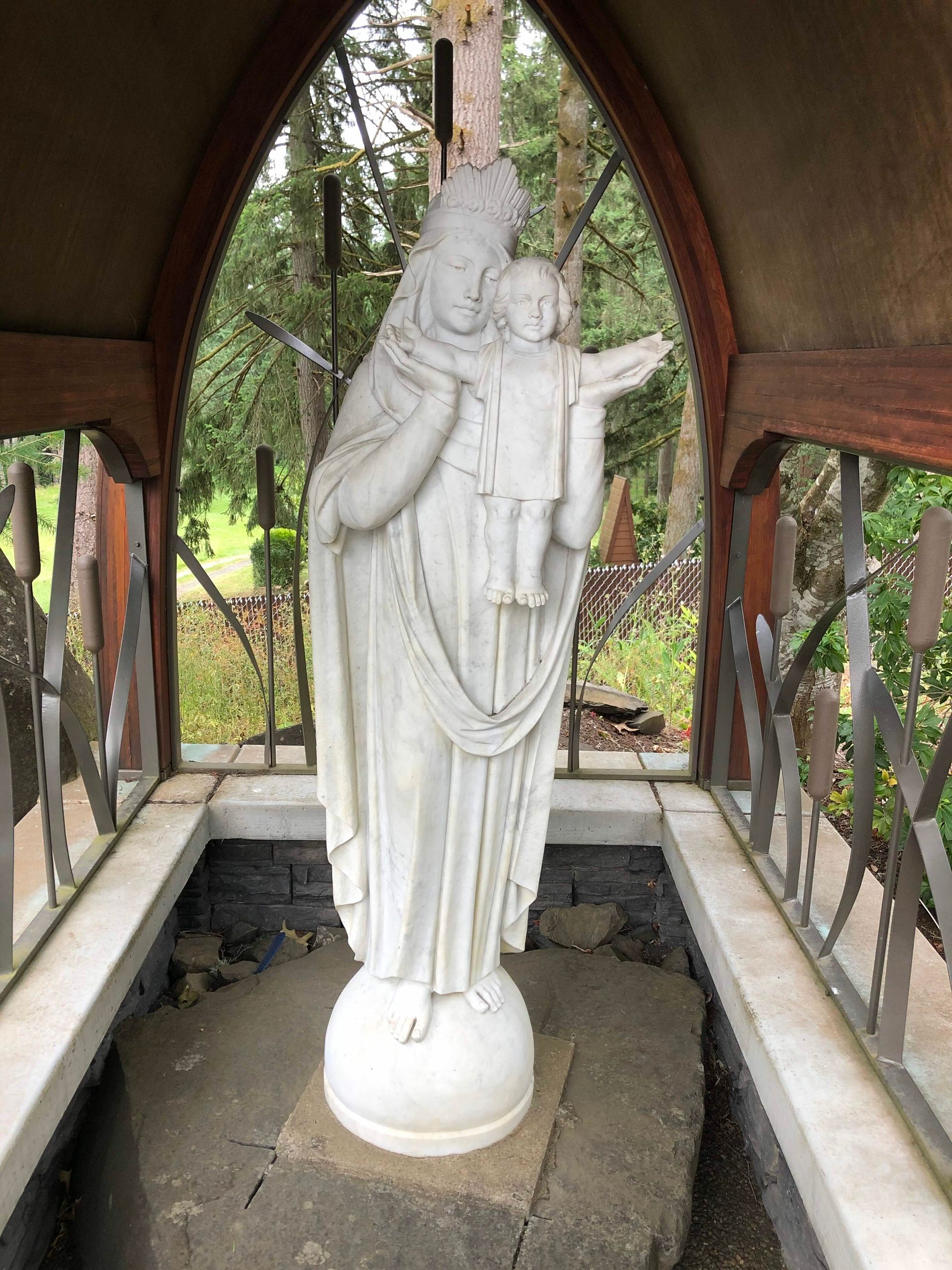
Mary is assumed into heaven as disciple, mother, and daughter.
Christ reigns as King.
Mary is crowned as Queen Mother, sharing in the victory of her Son.
This does not take anything away from Jesus. It magnifies Him.
Everything beautiful in Mary comes from Christ. Everything glorious in Mary points back to Christ. Mary is not the source of salvation. She is the masterpiece of salvation.
That is why her glory gives us hope.
Sometimes we look at our own lives and see weakness. We see sin, wounds, limitations, failures, aging, suffering, and death. We see the Church struggling. We see the world wounded by confusion and violence. We can be tempted to think that the darkness is stronger than the light.
But then we look at Mary assumed and crowned.
And we remember: this is what grace can do.
This is what Christ’s victory means.
This is what God desires for His children.
Mary in heaven is not a distant ornament. She is a sign of hope.
She shows us that the Cross leads to glory.
She shows us that Holy Saturday waiting is not in vain.
She shows us that Easter joy is stronger than death.
She shows us that the Church praying in weakness will one day be the Church radiant in glory.
And because Mary is crowned, she also intercedes.
A queen mother in the biblical tradition is not merely decorative. She has a place near the king. She brings the needs of the people before him. We see this image in the Old Testament when the mother of the king has a place of honor beside the throne.
Mary, crowned in heaven, does not stop being our mother. Her motherhood is perfected.
At the Cross, Jesus said, “Behold, your mother.” In heaven, Mary continues to be that mother. She prays for the Church. She prays for sinners. She prays for those who suffer. She prays for those who are afraid. She prays for those who are still living their Holy Saturday.
And so we can turn to her with confidence.
Not because she replaces Jesus, but because she belongs completely to Jesus.
Not because she is more merciful than Jesus, but because her maternal heart shares perfectly in His mercy.
Not because she draws attention away from Christ, but because she always leads us to Him.
The crowned Mary still says what she said at Cana: “Do whatever He tells you.”
And she still teaches us her fiat: “Let it be done to me according to your word.”
That is the road to glory.
The road to glory is not self-exaltation. It is humble surrender to God.
Mary is crowned because she humbled herself.
Mary is exalted because she called herself the handmaid of the Lord.
Mary reigns because she belonged entirely to Christ.
This is very important for us on retreat.
Because the goal of a retreat is not merely to feel better for a few days. The goal is to become saints.
The goal is to surrender more deeply to God.
The goal is to let Christ reign more fully in our hearts.
The goal is to become, by grace, what Mary already is in glory: fully alive, fully redeemed, fully surrendered, fully united to God.
Mary assumed and crowned reminds us that holiness is not a small thing. God does not merely want to improve us a little. He wants to glorify us. He wants to make us radiant with His life. He wants us to share forever in the victory of His Son.
So at the end of this reflection, we look to Mary in heaven and we see our hope.
We see the woman who believed.
We see the mother who stood.
We see the disciple who waited.
We see the heart that rejoiced.
We see the mother who prayed with the Church.
And now we see the Queen who intercedes for the Church until all her children come home.
Mary’s story after the Resurrection is not really separate from our story.
She shows us how to live Easter faith now.
And she shows us what Easter faith becomes in eternity.
So we can say to her:
Mary, Mother of the Risen Church, teach us to believe as you believed.
Teach us to stand at the Cross.
Teach us to hope through Holy Saturday.
Teach us to receive Easter joy.
Teach us to pray for the Holy Spirit.
And lead us, at last, to the glory of your Son, where every tear is wiped away, every promise is fulfilled, and the joy of the Resurrection has no end.
Conclusion:
Mary teaches us that Christian faith is not merely believing when we understand, when we feel consolation, or when we see the outcome. Christian faith is trusting God through the Cross, waiting with hope through Holy Saturday, and receiving Easter joy when God reveals that His promises were never broken.
Mary teaches us how to live after Easter. She teaches us to remain faithful when we do not understand, to hope when everything seems buried, and to pray when we are waiting for the power of the Holy Spirit. She teaches us that the Resurrection is not just an event to be remembered, but a light to live by. And as she stood with the Church in the beginning, she stands with the Church still. She stands with us, not replacing Christ, but leading us to Him, saying always what she said at Cana: “Do whatever He tells you.”